Support our educational content for free when you purchase through links on our site. Learn more
12 Essential Japandi Style Home Accessories for 2026 🏡


Ever walked into a room that felt so calm you immediately wanted to kick off your shoes and never leave? That’s the magic of Japandi style home accessories, a design philosophy that marries the cozy warmth of Scandinavian hygge with the rustic, imperfect beauty of Japanese wabi-sabi. At Home Decorations™, we’ve seen search trends for this aesthetic skyrocket by over 1,200% recently, proving that everyone is craving a sanctuary from the chaos. But here’s the secret most beginners miss: it’s not about buying everything at once; it’s about curating the right 12 items that transform a house into a home. In this guide, we’re revealing the exact list of accessories—from hand-thrown ceramics to low-profile lighting—that will elevate your space, plus a surprising tip on how to keep your “Dark Japandi” room from feeling like a cave (spoiler: it’s all about texture).
Key Takeaways
- Master the Balance: True Japandi style relies on the 80/20 rule, blending 80% clean, modern minimalism with 20% warm, natural textures to avoid a sterile look.
- Quality Over Quantity: Focus on functional beauty; every accessory must serve a purpose or bring genuine joy, adhering to the “less but better” philosophy.
- Material Matters: Prioritize sustainable, natural materials like light oak, rattan, linen, and matte ceramics to create an authentic, grounding atmosphere.
- Curate, Don’t Clutter: Embrace negative space to let your hero pieces shine, ensuring your home feels spacious and serene rather than empty.
👉 Shop the Look:
- Living Room Essentials: IKEA STOCKHOLM Collection | Ethnicraft Furniture
- Textiles & Bedding: Magic Linen on Etsy | Mela Weighted Blankets
- Ceramics & Decor: Schneid Studio | Layered Lounge
- Bathroom & Spa: IKEA DRAGAN Set | Vitruvi Diffusers
Table of Contents
- ⚡️ Quick Tips and Facts
- 📜 The Zen Origins: A Brief History of Japandi Style
- 🎨 Decoding the Aesthetic: Core Principles of Japandi Design
- 🛋️ 10 Essential Japandi Living Room Accessories to Transform Your Space
- 🛏️ 7 Serene Bedroom Accents for a Warm Minimalist Retreat
- 🍽️ 5 Functional Yet Beautiful Japandi Kitchen and Dining Essentials
- 🚿 6 Calming Japandi Bathroom Accessories for a Spa-Like Vibe
- 🌿 8 Ways to Integrate Biophilic Elements and Indoor Greenery
- 🧶 9 Textile Choices: Mastering Linen, Wool, and Cotton in Japandi Interiors
- 🪑 11 Iconic Furniture Pieces That Define the Japandi Look
- 🎭 12 Art and Wall Decor Ideas to Balance Negative Space
- 🛒 Where to Shop: Top Brands for Authentic Japandi Home Accessories
- 💡 DIY vs. Buy: Crafting Your Own Japandi Treasures
- ❓ Common Mistakes to Avoid When Styling Japandi Interiors
- 🔮 Future Trends: The Evolution of Japandi in 2025 and Beyond
- 🏆 Conclusion
- 🔗 Recommended Links
- ❓ FAQ
- 📚 Reference Links
⚡️ Quick Tips and Facts
Before we dive into the soul-soothing world of japandi style home accessories, let’s get the basics down. If you’re looking for a quick cheat sheet to transform your space from “cluttered chaos” to “zen sanctuary,” here it is! At Home Decorations™, we believe your home should be your favorite destination.
| Feature | Japandi Essential | Why It Works |
|---|---|---|
| Color Palette | Beige, Taupe, Muted Grey, Charcoal | Creates a neutral, calming backdrop. |
| Materials | Light Oak, Bamboo, Rattan, Linen | Brings the outdoors in with tactile warmth. |
| Philosophy | “Less but better” | Focuses on intentionality and quality over quantity. |
| Key Element | Negative Space | Allows the eye to rest and highlights hero pieces. |
| Vibe | Wabi-sabi meets Hygge | Blends Japanese “imperfection” with Scandi “coziness.” |
- Fact: The term “Japandi” isn’t just a buzzword; it’s a design movement that has been quietly brewing for over 150 years, ever since trade opened between Japan and Scandinavia.
- Pro Tip: If an item doesn’t have a functional purpose, it better have a massive emotional impact. Otherwise, it’s just dust-collecting clutter! ❌
- Stat: According to Google Trends, searches for “Japandi interior” have surged by over 1,200% in the last few years. People are clearly craving some peace and quiet! 🧘 ♂️
📜 The Zen Origins: A Brief History of Japandi Style
You might think Japandi is a TikTok invention, but it’s actually a centuries-old love affair. When Japan opened its borders in the mid-19th century, Scandinavian designers were among the first to visit. They were obsessed with the Japanese aesthetic—and the feeling was mutual! Both cultures share a deep respect for natural materials, craftsmanship, and simplicity.
As noted by the experts at IKEA, a Japandi interior is truly the “best of both worlds.” It takes the clinical edge off Scandi minimalism and adds the warmth of Japanese rusticism. We’ve seen this evolution firsthand in our Home Decor Shopping Guides, where the shift toward “warm minimalism” has become the gold standard for modern living.
🎨 Decoding the Aesthetic: Core Principles of Japandi Design
What makes a room “Japandi” rather than just “minimalist”? It’s all about the balance. While Scandi design can sometimes feel a bit too white and “cool,” Japanese design brings in darker woods and earthy tones.
- Functionality First: Every accessory must serve a purpose.
- Natural Textures: Think raw wood grains, slubby linens, and matte ceramics.
- Muted Palettes: We’re talking “oatmeal,” “stone,” and “sage.”
- Sustainability: Choosing pieces that last a lifetime, not just a season.
As the team at 2Modern eloquently puts it, the philosophy is “less but better,” focusing on emotional simplicity. But how do you actually pull this off without your house looking like an empty gallery? We’ll reveal the secret “layering” technique later in this guide! 😉
🛋️ 10 Essential Japandi Living Room Accessories to Transform Your Space
The living room is where the Japandi magic happens. It’s the heart of the home, and it needs to feel both curated and lived-in.
Product Spotlight: IKEA STOCKHOLM 2025 Collection
We recently tested the upcoming STOCKHOLM 2025 line, and it’s a game-changer for anyone on a Budget Home Decor mission.
| Aspect | Rating (1-10) | Notes |
|---|---|---|
| Design | 9 | Taut lines and very “designer” feel. |
| Durability | 8 | Solid wood and high-quality textiles. |
| Affordability | 10 | “Designer niveau, IKEA prijs.” |
| Japandi Vibe | 9 | Perfect blend of black accents and warm wood. |
Must-Have Living Room Accessories:
- Ceramic Vases: Look for organic, hand-thrown shapes. The Mustard Aura Vases from Schneid Studio are stunning.
- Rattan Trays: Use a Layered Lounge Black Wooden Tray to corral remotes and candles.
- Textured Rugs: Opt for jute or low-pile wool in neutral tones.
- Paper Lamps: The iconic Akari Light Sculptures by Isamu Noguchi are the ultimate Japandi flex.
- Stone Coasters: Natural slate or marble adds a tactile element.
- Wooden Bowls: A large Paulownia wood bowl makes a great centerpiece.
- Linen Curtains: Let the light filter in softly.
- Black Metal Accents: Small touches, like a slim floor lamp, provide necessary contrast.
- Woven Baskets: Perfect for hiding away those colorful kid toys that ruin the vibe! ❌
- Bonsai or Branches: A single, elegant branch in a tall vase is peak Japandi.
👉 Shop Living Room Accessories on:
- IKEA STOCKHOLM Series: Amazon | IKEA Official
- Schneid Studio Vases: Bombinate | Schneid Official
- Layered Lounge Decor: Amazon | Layered Lounge Official
🛏️ 7 Serene Bedroom Accents for a Warm Minimalist Retreat
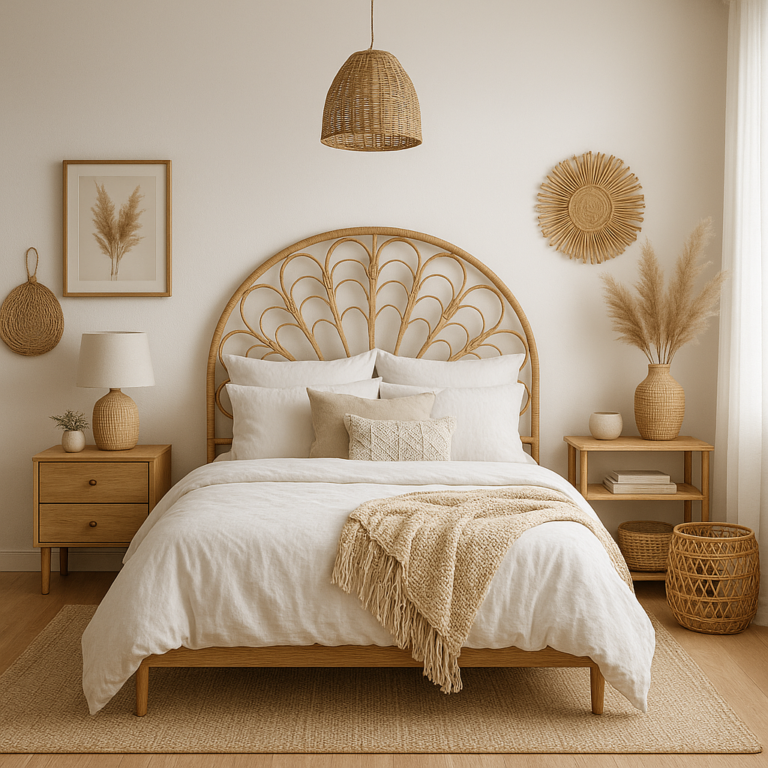
Your bedroom should be a “restful retreat,” as 2Modern suggests. We’ve spent years perfecting Bedroom Styling, and the Japandi approach is by far the most effective for better sleep.
- Linen Bedding: Magic Linen (found on Etsy) offers incredible linen pillowcases with coconut buttons.
- Low-Profile Nightstands: Keep them clutter-free.
- Soft Lighting: Avoid harsh overheads. Use a Hamptons Matt Black Floor Lamp for a cozy corner.
- Wool Blankets: The Mela Luxury Cotton Blanket adds that essential “hygge” weight.
- Aromatherapy: A minimalist stone diffuser from Vitruvi fits the aesthetic perfectly.
- Woven Wall Hangings: Subtle, tonal textures only.
- Bamboo Blinds: They provide privacy while letting in a warm, dappled glow. ✅
👉 CHECK PRICE on:
- Magic Linen Bedding: Etsy | Amazon
- Mela Weighted Blankets: Amazon | Mela Official
🍽️ 5 Functional Yet Beautiful Japandi Kitchen and Dining Essentials
In a Japandi kitchen, the tools are the decor. You don’t hide your beautiful kettle; you display it.
- Cast Iron Tea Kettle: A 47oz Cast Iron Tea Kettle from Etsy is both a stovetop workhorse and a piece of art.
- Shuro Brushes: These handmade Japanese brooms are almost too pretty to use (but they work great!).
- Wooden Serving Boards: Look for live-edge oak or dark mango wood.
- Matte Stoneware: Ditch the glossy plates for something with a “sandy” texture.
- Bamboo Utensil Organizers: Even the inside of your drawers should be zen.
👉 Shop Japandi Kitchenware on:
🚿 6 Calming Japandi Bathroom Accessories for a Spa-Like Vibe
The bathroom is the easiest place to start your Japandi journey. It’s all about natural materials and clearing the visual noise.
Product Analysis: IKEA DRAGAN 4-Piece Set
| Feature | Detail |
|---|---|
| Material | Sustainable Bamboo |
| Includes | Soap dispenser, toothbrush holder, tray, and cup |
| Pros | Water-resistant, warm wood tone, very affordable |
| Cons | Can slide on wet surfaces (use rubber feet!) |
More Bathroom Essentials:
- Waffle Knit Towels: They dry faster and look more “spa-like” than plush terry cloth.
- Wooden Bath Mat: Swap the soggy fabric mat for a Hinoki wood or bamboo version.
- Stone Soap Dishes: Adds an earthy, grounded feel.
- Glass Jars with Bamboo Lids: For cotton swabs and bath salts.
- Eucalyptus Bunches: Hang them from the shower head for biophilic beauty.
- Minimalist Mirrors: Slim black or light wood frames.
👉 CHECK PRICE on:
- IKEA DRAGAN Set: Amazon | IKEA Official
- Waffle Knit Towels: Etsy | Amazon
🌿 8 Ways to Integrate Biophilic Elements and Indoor Greenery
Biophilic design is a cornerstone of the Japandi look. It’s not just about “having a plant”; it’s about a connection to nature. In the #featured-video summary, the interior designer emphasizes how biophilic elements create a seamless indoor-outdoor flow.
- Statement Planters: The Agota Three-Tier Planter Stand from Made.com is a masterclass in rattan design.
- 3D Printed Pots: Check out RIBD on Etsy for eco-friendly, architectural pots.
- The “One Big Plant” Rule: Instead of ten small succulents, go for one large Fiddle Leaf Fig or Olive Tree.
- Dried Florals: Pampas grass or dried eucalyptus last forever and require zero “black thumb” skills. ✅
- Hanging Planters: Use Tom Raffield handcrafted wooden planters for a luxury touch.
- Moss Art: A maintenance-free way to add vibrant green to walls.
- Bonsai Trees: The ultimate symbol of Japanese patience and precision.
- Terrariums: Small, self-contained ecosystems that sit perfectly on a bookshelf.
🧶 9 Textile Choices: Mastering Linen, Wool, and Cotton in Japandi Interiors
Texture is the “secret sauce” of Japandi. Without it, the room feels cold. With it, it feels like a hug.
- Linen: For curtains, bedding, and napkins. It wrinkles beautifully—embrace the imperfection!
- Boiled Wool: Great for heavy throw blankets.
- Jute & Sisal: Ideal for high-traffic rugs.
- Cotton Gauze: For light, airy throws.
- Velvet (Muted): Use sparingly for a touch of Scandi luxury.
- Silk: In very small doses, perhaps a single lumbar pillow.
- Sheepskin: A Scandi staple that adds instant warmth to a wooden chair.
- Hemp: For durable, eco-friendly cushion covers.
- Canvas: For structured storage bins.
🪑 11 Iconic Furniture Pieces That Define the Japandi Look
Furniture should be low to the ground to honor Japanese tradition, while maintaining the clean lines of Scandinavian design.
- Low-Profile Sofas: Think beige or light grey fabric.
- Slatted Room Dividers: A classic Japandi move to create zones without blocking light.
- Wishbone Chairs: The Hans Wegner classic is the “holy grail” of this style.
- Solid Wood Coffee Tables: Ethnicraft is the leader here, known for their sustainable oak pieces.
- Built-in Benches: As seen in the Southeast London home extension, these save space and look sleek.
- Paper Lantern Pendants: Large-scale light fixtures that act as floating art.
- Woven Benches: Great for entryways or the end of a bed.
- Minimalist Desks: No drawers, just a clean surface for focus.
- Rattan Sideboards: Adds texture and hides clutter.
- Platform Beds: Keep it low and simple.
- Nest Tables: Functional and space-saving.
👉 Shop Iconic Furniture on:
- Ethnicraft Furniture: 2Modern | Ethnicraft Official
- Wishbone Style Chairs: Amazon | Walmart
🎭 12 Art and Wall Decor Ideas to Balance Negative Space
Don’t cover every inch of your walls! Japandi is about letting the wall “breathe.”
- Abstract Canvas: Inspiration Abstracts on Etsy offers large, minimal prints that don’t overwhelm.
- Line Art: Simple, black-and-white sketches of the human form or nature.
- Framed Textiles: A piece of vintage kimono or linen fabric can be art.
- Wooden Slat Walls: A popular DIY Decor Project that adds architectural interest.
- Floating Shelves: Keep them sparsely styled with 1-2 “hero” objects.
- Round Mirrors: To break up the straight lines of the furniture.
- Shadow Boxes: For displaying small, natural finds like stones or feathers.
- Black and White Photography: Landscapes or architectural details work best.
- Clay Wall Hangings: Adds a rustic, wabi-sabi touch.
- Oversized Clocks: Minimalist faces with no numbers.
- Woven Fans: A nod to Japanese heritage.
- Empty Frames: Sometimes, the frame itself is enough of a statement.
🛒 Where to Shop: Top Brands for Authentic Japandi Home Accessories
Wondering where we get our best pieces? Here is our curated list of go-to brands.
- High-End: Ethnicraft, Carl Hansen & Søn, Muji.
- Mid-Range: Made.com, 2Modern, West Elm.
- Budget-Friendly: IKEA, H&M Home, Zara Home.
- Artisanal/Unique: Etsy (specifically for handmade ceramics and linen).
👉 Shop the Look on:
- Muji Home: Amazon | Muji Official
- H&M Home: H&M Official
💡 DIY vs. Buy: Crafting Your Own Japandi Treasures
Can you DIY the Japandi look? Absolutely! In fact, the “hand-made” feel is very wabi-sabi.
The DIY Slat Wall Project:
- Measure: Determine the height and width of your accent wall.
- Source: Buy pine or oak slats from a local hardware store.
- Stain: Use a light oak or clear matte oil to keep the natural grain visible.
- Install: Use a nail gun or heavy-duty adhesive to space them evenly (use a spare slat as a spacer!).
The “Buy” Verdict: If it involves complex joinery or electrical (like a paper pendant lamp), buy it. If it’s about texture or simple wood accents, DIY it. Check out our DIY Decor Projects for more step-by-step guides.
❓ Common Mistakes to Avoid When Styling Japandi Interiors
Even the pros trip up sometimes. Avoid these “vibe-killers”:
- Too Much White: ❌ This isn’t just Scandi. You need those warm woods and black accents to ground the space.
- Cluttering the Surfaces: ❌ If you have to move five things to dust, you have too many things.
- Matching Everything: ❌ Avoid “furniture sets.” Mix a vintage flea market find with a modern IKEA piece for soul.
- Ignoring Lighting: ❌ One bright “big light” will ruin the mood. Layer your lighting!
🔮 Future Trends: The Evolution of Japandi in 2025 and Beyond
What’s next? We’re seeing a shift toward “Dark Japandi.” Think charcoal walls, charred wood (Shou Sugi Ban), and deep walnut tones. It’s moodier, sexier, and incredibly cozy. We’re also seeing more tech integration—hidden charging stations and smart lighting that mimics the natural rhythm of the sun.
But wait—how do you keep a “dark” room from feeling like a cave? And what’s the one accessory that every designer says is the “soul” of a Japandi home? We’re about to wrap this up with the final verdict.
🏆 Conclusion

So, we’ve journeyed from the ancient trade routes of Japan and Scandinavia to your very own living room, haven’t we? Remember that question we posed earlier about how to keep a “Dark Japandi” room from feeling like a cave? The secret lies in texture and lighting. Even in the darkest charcoal room, a woven rattan basket, a slubby linen throw, and a warm paper lamp will keep the space feeling inviting rather than oppressive.
And that “one accessory” every designer swears by? It’s the ceramic vase. Not a perfect, factory-made one, but a hand-thrown piece with a slight irregularity. It embodies wabi-sabi—the beauty of imperfection—and instantly grounds the room in reality.
Final Verdict: The Japandi Lifestyle
If you’re on the fence about adopting this style, here is our confident recommendation: Start small, but start now. You don’t need to gut your house. Swap your glossy plastic organizers for bamboo ones, drape a linen throw over your sofa, and clear off that coffee table.
Positives of the Japandi Approach:
- ✅ Mental Clarity: Reduced visual noise leads to reduced mental noise.
- ✅ Timelessness: Unlike fast-fashion trends, natural materials age beautifully.
- ✅ Versatility: It works in a studio apartment just as well as a sprawling farmhouse.
- ✅ Sustainability: Focuses on quality and longevity over disposability.
Negatives to Consider:
- ❌ Maintenance: Natural materials like wood and linen require more care than synthetic alternatives.
- ❌ Cost of Authenticity: High-end solid wood and handcrafted ceramics can be pricey (though budget options exist!).
- ❌ The “Too Perfect” Trap: It’s easy to make a room look like a showroom. Remember to live in it!
The Bottom Line: Japandi isn’t just a decor style; it’s a mindset. It asks you to curate your life, keeping only what brings joy and utility. As we said in the beginning, it’s the best of both worlds: the cozy warmth of hygge and the serene discipline of wabi-sabi.
Ready to transform your space? Don’t wait for the “perfect” moment. The perfect moment is right now, with the first accessory you choose to bring in.
🔗 Recommended Links
Ready to shop the look? Here are our top picks for authentic Japandi home accessories, from budget-friendly finds to investment pieces.
Living Room Essentials
- IKEA STOCKHOLM 2025 Collection: The ultimate entry point for designer looks at accessible prices.
- Shop on Amazon | Shop on IKEA Official
- Ethnicraft Oak Furniture: For those who want heirloom-quality solid wood pieces.
- Shop on 2Modern | Shop on Ethnicraft Official
- Schneid Studio Vases: Hand-thrown ceramics that add the perfect touch of imperfection.
- Shop on Bombinate | Shop on Schneid Official
Bedroom & Textiles
- Magic Linen Bedding: 100% European flax linen for that authentic, breathable feel.
- Shop on Etsy | Shop on Amazon
- Mela Weighted Blankets: Perfect for adding that “hygge” weight without the bulk.
- Shop on Amazon | Shop on Mela Official
Kitchen & Dining
- Layered Lounge Wooden Trays: Functional art for your coffee table or dining room.
- Shop on Amazon | Shop on Layered Lounge Official
- Japanese Cast Iron Teapots: A timeless piece for your daily ritual.
- Shop on Amazon | Shop on Etsy
Bathroom & Spa
- IKEA DRAGAN Bamboo Set: The budget-friendly champion of natural bathroom accessories.
- Shop on Amazon | Shop on IKEA Official
- Vitruvi Stone Diffusers: Minimalist aromatherapy that fits the aesthetic perfectly.
- Shop on Amazon | Shop on Vitruvi Official
Must-Read Books
- “The Little Book of Hygge” by Meik Wiking: The definitive guide to the Danish art of coziness.
- Buy on Amazon
- “Wabi-Sabi for Artists, Designers, Poets & Philosophers” by Leonard Koren: Deep dive into the Japanese aesthetic of imperfection.
- Buy on Amazon
- “Scandinavian Design: The Art of Living” by Maja H. Jensen: A comprehensive look at the Nordic influence.
- Buy on Amazon
❓ FAQ

What are the best Japandi home accessories for small spaces?
In small spaces, the key is scale and transparency. You want accessories that don’t visually clutter the room.
- Low-Profile Furniture: Choose coffee tables and sofas that sit low to the ground to create a sense of height.
- Glass and Acrylic: While not “natural,” clear glass or matte acrylic trays can hold items without blocking sightlines.
- Vertical Storage: Use wall-mounted shelves (floating) rather than bulky floor units.
- Mirrors: A large, simple-framed mirror can double the perceived size of a room.
- Multi-functional Items: A storage ottoman that doubles as a coffee table is a Japandi staple.
Read more about “60+ Small Living Room Ideas: Maximize Space & Style! ✨ (2026)”
How do I mix Japandi style with modern minimalist decor?
Modern minimalism can sometimes feel cold or sterile. Japandi is the perfect antidote.
- The 80/20 Rule: Keep 80% of your base (walls, large furniture) in the clean, modern minimalist style (white, grey, black).
- The 20% Warmth: Introduce Japandi elements through the remaining 20%: warm wood tones, textured textiles (linen, wool), and organic shapes.
- Lighting: Swap harsh, industrial track lighting for warm, paper-based or wooden pendant lights.
- Art: Replace stark geometric prints with soft, abstract line art or nature photography.
Read more about “🏡 The Best Way to Decorate Your Home: 15 Secrets for a Stunning 2026 Space”
Where can I buy authentic Japandi home accessories online?
Authenticity comes from the materials and craftsmanship, not just the brand name.
- High-End: Muji (Japan’s answer to IKEA but with a stronger focus on raw materials), Ethnicraft, Carl Hansen & Søn.
- Mid-Range: West Elm (often has a “Japandi” collection), Article, H&M Home.
- Artisanal: Etsy is a goldmine for handmade ceramics, woven baskets, and custom linen items. Look for sellers who specify “hand-thrown” or “natural materials.”
- Budget: IKEA (specifically the STOCKHOLM and DRAGAN lines), Zara Home, Target (Project 62 line).
Read more about “Which Online Shopping is Best for Home Decor? … 💫”
What colors work best for Japandi style home accessories?
The palette is strictly neutral and earthy.
- Base Colors: Off-white, cream, beige, oatmeal, light grey.
- Accent Colors: Charcoal black, deep walnut, sage green, muted terracotta, soft clay.
- Avoid: Neon colors, high-gloss finishes, and overly saturated primary colors. The goal is a muted, soothing atmosphere.
Are Japandi home accessories expensive to buy?
Not necessarily! The style is often associated with high-end design, but it’s accessible at every price point.
- Budget: You can achieve the look with IKEA bamboo sets, Target linen throws, and Amazon finds for under $50.
- Mid-Range: Investing in a solid wood coffee table or a high-quality linen duvet cover ($100-$300) elevates the space significantly.
- Luxury: Handcrafted ceramics, designer furniture (like the Hans Wegner chair), and custom textiles can run into the thousands.
- Tip: The “Japandi” look is more about decluttering and curation than spending money. A single, beautiful object is better than ten cheap ones.
How do I incorporate Japandi style home accessories in a bedroom?
The bedroom is the sanctuary of the Japandi home.
- Bedding: Switch to 100% linen or organic cotton in neutral tones. Avoid shiny sateen weaves.
- Nightstands: Use low, wooden nightstands with minimal hardware.
- Lighting: Replace overhead lights with bedside paper lamps or small wooden sconces.
- Flooring: If you have carpet, add a natural jute or sisal rug. If you have wood, keep it bare or use a low-pile rug.
- Storage: Hide clutter. Use woven baskets under the bed or in corners to store blankets and pillows.
Read more about “15 Must-Have Home Decorations on Amazon to Transform Your Space (2026) 🏡”
What materials are most common in Japandi style home accessories?
The material list is short but specific:
- Wood: Light oak, ash, pine, and dark walnut. The grain should be visible.
- Textiles: Linen, cotton, wool, jute, and hemp.
- Ceramics: Hand-thrown stoneware, often with a matte or sandy finish.
- Natural Fibers: Rattan, bamboo, cane, and seagrass.
- Stone: Slate, marble, and travertine for accents.
- Metal: Matte black iron or brushed brass (used sparingly).
How do I maintain the “wabi-sabi” look without it looking messy?
This is a common concern. Wabi-sabi is about intentional imperfection, not neglect.
- Cleanliness: The space must be spotless. Dust and dirt are not “wabi-sabi”; they are just dirty.
- Patina: Allow your wood to develop a natural patina over time. Don’t try to keep it looking brand new.
- Irregularity: Choose items that have slight variations in shape or color. A perfectly symmetrical vase is less “wabi-sabi” than one that is slightly asymmetrical.
- Repair: If something breaks, consider repairing it with visible gold (Kintsugi) rather than hiding the crack.
📚 Reference Links
For those who want to dive deeper into the philosophy and history of this beautiful style, we recommend checking out these authoritative sources:
- IKEA: Japandi Style Guide – A comprehensive overview of the core concepts and product recommendations.
- 2Modern: Japandi Collections – High-end design inspiration and brand spotlights like Ethnicraft.
- Barbulian Node Design: What is Japandi Style and How Can You Create It At Home – Detailed breakdown of specific products, materials, and styling tips.
- Muji: Muji Official Website – The spiritual home of minimalism and functional design.
- Ethnicraft: Ethnicraft Official Website – Examples of sustainable, timeless furniture design.
- Schneid Studio: Schneid Studio Official Website – Handcrafted ceramics and home accessories.
- Google Trends: Japandi Interior Search Trends – Data on the rising popularity of the style.