Support our educational content for free when you purchase through links on our site. Learn more
Dopamine Decor Trend: 15 Joyful Ideas for Your Home 🌈

The dopamine decor trend is about shaping your home around the colors, textures, and treasured objects you genuinely enjoy—not following a one-size-fits-all prescription for happiness. Start with one detail that makes you smile, then build a room that feels personal, comfortable, and easy to live in.
In our decorating work, we’ve seen a single keepsake kick off a whole-room refresh: a travel print inspired a client’s color palette, while a favorite lamp made their reading corner feel like their own. No neon makeover required. And despite its name, dopamine decor isn’t a scientifically proven mood treatment; it’s a feel-good design approach, not a substitute for mental-health care.
Key Takeaways
- Make it personal: Choose decor because you love it, not just because it’s trending.
- Color is optional: Bold hues can be joyful, but soft shades, meaningful art, and favorite objects count too.
- Start small: Try one lamp, cushion, artwork, or painted shelf before committing to a major makeover.
- Balance delight with function: Keep comfort, storage, lighting, and everyday routines in the design plan.
- Skip the dopamine promises: Your surroundings can shape your experience, but no decor style guarantees happiness.
Table of Contents
- ⚡️ Quick Tips and Facts
- 🎨 What Is Dopamine Decor? The Joy-First Interior Design Trend
- 🧠 Dopamine, Mood, and the Science Behind Feel-Good Design
- Does Dopamine Decor Really Boost Happiness?
- How Color, Light, Texture, and Memory Shape a Room
- 📚 How Dopamine Decor Evolved: From Colorful Homes to Personal Expression
- 🌈 15 Dopamine Decor Ideas to Make Your Home Feel More Like You
- 1. Choose Colors That Lift Your Mood
- 2. Mix Patterns Without Making a Visual Mess
- 3. Add Playful, Sculptural Furniture
- 4. Layer Tactile Textures and Cozy Fabrics
- 5. Display Art You Genuinely Love
- 6. Put Treasured Collections on Show
- 7. Bring in Joyful Lighting
- 8. Use Mirrors to Bounce Color and Light
- 9. Add Plants and Natural Materials
- 10. Make Everyday Objects Decorative
- 11. Give Small Spaces a Big Personality
- 12. Personalize a Rental Without Permanent Changes
- 13. Create a Dopamine Decor Bedroom for Rest and Joy
- 14. Design a Cheerful Home Office or Study Nook
- 15. Refresh Your Home on a Budget
- 🛋️ Dopamine Decor Room by Room
- Living Room
- Kitchen and Dining Room
- Bathroom
- Entryway and Hallway
- 🎯 How to Find Your Personal Dopamine Decor Style
- Build a Mood Board Around What You Love
- Pick a Color Palette That Fels Right
- Balance Maximalist Color with Breathing Room
- 🪄 Dopamine Decor vs. Maximalism, Colorful Interiors, and Clutter
- ✅ A Practical Dopamine Decor Plan: Start Small, Then Layer
- ⚠️ Common Dopamine Decor Mistakes and How to Avoid Them
- 🌿 Sensory-Rich Interiors: Making a Home Feel Restorative
- 🧹 How to Keep a Joyful Home Functional, Calm, and Easy to Maintain
- Conclusion
- Recommended Links
- FAQ
- Is dopamine decor the same as maximalism?
- What colors are best for dopamine decor?
- Can dopamine decor work in a small room?
- How do I try dopamine decor in a rental?
- Can a neutral home still use dopamine decor?
- Does dopamine decor actually increase dopamine?
- How can I make a colorful room feel cohesive?
- Reference Links
Quick Tips and Facts
Dopamine decor is less about prescribing “happy colors” and more about building a home around the objects, colors, textures, and routines that feel good to you. Our team at Home Decorations™ sees it as personal, practical interior design with room for a little whimsy. For more inspiration, browse our home decorating ideas.
| Quick fact | What it means for your home |
|---|---|
| It’s a feeling-first approach | Choose decor for personal meaning and everyday enjoyment, not because a trend says it matches. |
| Bold color is optional | Saturated color can feel energizing; soft peach, lavender, or a favorite neutral can feel joyful too. |
| Maximalism isn’t a requirement | One beloved lamp can do more for your mood than a room full of things you don’t care about. |
| Function still matters | A joyful reading nook should invite reading; a colorful chair should still be comfortable. |
| Start small | Try a pillow, framed print, lamp, or painted shelf before committing to wallpaper or a full-room makeover. |
| Dopamine is not a decor guarantee | A pleasing space may support a positive experience, but decor is not a treatment for mental-health conditions. |
✅ Our decorator rule: If an item makes you smile and has a place to live, it’s a strong candidate. If it looks great online but makes your room harder to use, let it go.
What Is Dopamine Decor? The Joy-First Interior Design Trend
Dopamine decor is a personal, joy-first approach to interior design: furnishing and styling your home with colors, patterns, textures, art, and keepsakes that you genuinely enjoy. It’s often associated with bright, expressive interiors, but the central idea isn’t “make everything neon.” It’s make your space feel more like you.
The phrase borows its name from dopamine, a neurotransmitter involved in reward, motivation, and learning. That doesn’t mean a yellow sofa reliably “releases dopamine,” or that a certain paint shade will automatically make you happy. It’s a catchy design label, not a clinical prescription.
The trend grew alongside “dopamine dressing,” the idea of choosing clothes that make you feel good. Design coverage from ELE Decor and HGTV describes a similar turn toward expressive, personal interiors: a home can be colorful and playful, but it should also feel comfortable and livable.
| Dopamine decor can include… | It doesn’t have to mean… |
|---|---|
| A treasured travel souvenir on a shelf | Buying a whole room of trend-led accessories |
| A vivid accent chair or patterned rug | Painting every wall a saturated shade |
| A gallery wall combining old and new art | Making every object compete for attention |
| Cozy textures and warm, layered lighting | Choosing style over comfort or accessibility |
| A room arranged around a favorite activity | Treating color as a cure for low mood |
We’ve seen the most convincing versions begin with one personal detail: a favorite piece of art, a hand-me-down lamp, a color remembered from a childhood bedroom. The rest of the room follows that lead. That’s a better starting point than asking, “What would look good in a viral video?”
Dopamine, Mood, and the Science Behind Feel-Good Design
Does Dopamine Decor Really Boost Happiness?
A more careful answer is: your surroundings can affect how you feel, but the popular name oversimplifies the science. Research into environmental psychology, aesthetic experience, light, and sensory perception suggests that spaces can shape mood, attention, comfort, and behavior. It does not establish that a specific decor trend produces a predictable dopamine response for everyone.
Aesthetic experience has been studied in relation to reward-related brain activity. For example, neuroscientist Semir Zeki and researcher Tomohiro Ishizu examined how people’s experience of beauty relates to brain activity in a study published in Frontiers in Human Neuroscience. That is useful context for why personally meaningful art may feel rewarding; it is not evidence that any bright room is a mood treatment.
Design writers sometimes use “dopamine decor” as shorthand for a broader mix of emotional and sensory responses. That’s understandable as an accessible label, but it shouldn’t be mistaken for a precise scientific category. Trust the lived experience of the person using the room, and treat claims about brain chemicals cautiously.
| What research can reasonably suggest | What it can’t promise |
|---|---|
| Light, visual complexity, and personal surroundings may influence experience | A particular paint color will make every person happy |
| Art people find beautiful can be associated with reward-related brain activity | A decor style treats depression, anxiety, or another health condition |
| Sensory cues can affect how people perceive other experiences | Every “dopamine decor” room is restorative or calming |
| Meaningful, functional spaces can support routines and enjoyment | Buying more objects automatically improves well-being |
How Color, Light, Texture, and Memory Shape a Room
Color is a powerful design tool, but its emotional meaning depends on context, culture, light, and personal associations. A room painted warm orange may feel welcoming to one person and overstimulating to another. The American Psychological Association discusses the complexity of color psychology, including why sweeping claims about universal color effects deserve caution.
- Color: Start with shades you enjoy seeing every day. Sample paint in morning and evening light before committing.
- Lighting: Combine ambient, task, and accent lighting instead of relying one harsh ceiling fixture. The U.S. Department of Energy offers practical guidance on efficient lighting choices.
- Texture: Velvet, linen, wool, rattan, glazed ceramic, and polished metal create different tactile and visual experiences. Use them to add depth without adding more color.
- Memory: A family photograph, inherited bowl, or souvenir can make a room feel specific to your life, not just professionally styled.
- Function: A pleasant, visible place for books or art supplies can make a valued activity easier to begin.
At Home Decorations™, we often ask clients to name the first three things they notice in a room. If the answer is “the sofa is comfortable, the afternoon light is lovely, and that print reminds me of my trip,” we’re off to a better start than if the answer is “the room matches a trend.”
How Dopamine Decor Evolved: From Colorful Homes to Personal Expression
Dopamine decor reflects a wider shift away from highly restrained, showroom-like interiors toward spaces that show personality. Its online popularity has been linked to social media and dopamine dressing, but the instinct behind it is older: people have long decorated homes with favorite objects, expressive textiles, collections, and family keepsakes.
What’s changed is the label and the speed at which styles travel. A bright room can be framed as a trend, recreated in a short video, and quickly reduced to a shopping list. Yet its most lasting idea is much simpler: your home doesn’t need to follow one approved aesthetic to be cohesive or beautiful.
The design coverage from ELE Decor emphasizes personal taste over strict rules, while HGTV’s designers also stress visual balance and function. Those perspectives aren’t in conflict. Personal expression gives a room its character; editing and practical choices make it comfortable to live in.
The first YouTube video about Gen Z apartment style can also help you spot how social-media aesthetics become recognizable interior looks. Watch it as a design-culture discussion, not a set of rules for what your home should contain.
15 Dopamine Decor Ideas to Make Your Home Feel More Like You
1. Choose Colors That Lift Your Mood
Pick a color you already enjoy rather than choosing one because it’s supposedly “energizing.” Test it on a small surface or with an accessory first. A saturated blue cushion, soft lilac bedside lamp, or sunny yellow vase can be enough.
Try this: Put two or three favorite colors together in a mood board, then add one grounding neutral or natural material so the palette has room to breathe.
2. Mix Patterns Without Making a Visual Mess
Pattern mixing works best when there’s a shared thread. It might be a repeated color, a similar scale, or a common motif.
- Pair one large-scale pattern with a smaller one.
- Use a stripe or check as a visual anchor.
- Repeat one color across curtains, cushions, or artwork.
- Keep a calmer surface nearby, such as a plain wall or solid sofa.
For example, a large floral cushion can sit comfortably beside a narrow stripe if both share a shade of green. The eye notices the connection, not just the difference.
3. Add Playful, Sculptural Furniture
A wavy mirror, curved chair, or unusual side table can add a dose of personality without requiring a full-room overhaul. Look at playful silhouettes from brands such as Urban Outfiters and West Elm, or hunt for distinctive vintage pieces.
Benefit: Sculptural shapes add interest even in a restrained palette.
Drawback: Very unusual furniture can be less comfortable or harder to place, so check dimensions and intended use before buying.
4. Layer Tactile Textures and Cozy Fabrics
A room feels more complete when it offers different textures: a wool rug underfoot, a velvet cushion, a linen curtain, and a smooth ceramic lamp. You don’t need every texture in every room. Pick a few that suit how you use the space.
- For cozy seating, try velvet, corduroy, or a washable woven cover.
- For a lighter look, use linen, cotton, cane, or rattan.
- For visual contrast, combine matte and glossy finishes.
If anyone in your home has sensory sensitivities, prioritize their comfort over a style checklist. A fabric that photographs beautifully but feels unpleasant is not a joyful choice.
5. Display Art You Genuinely Love
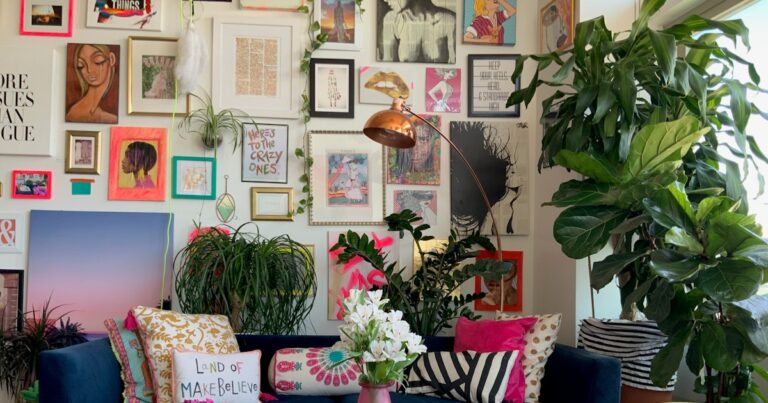
Hang art that means something to you, whether it’s a framed print, a child’s drawing, a concert poster, or a postcard. A gallery wall can mix different frame shapes and styles; repeating one color or spacing rhythm helps it feel deliberate.
For art placement, use removable paper templates to test the arrangement before drilling. Keep heavier frames properly anchored, especially in homes with children or pets.
6. Put Treasured Collections on Show
Collections can add warmth and tell a story, but display them with intention. Group objects by color, shape, era, or theme, and leave a little space around the arrangement.
A useful formula is one shelf for the collection, one shelf for breathing room. Rotate pieces seasonally if the display starts to feel visually crowded.
7. Bring in Joyful Lighting
Lighting has a bigger effect on atmosphere than many people expect. Use a mix of:
- Ambient light for overall illumination
- Task light for reading, cooking, or working
- Accent light to highlight art or create a cozy corner
A playful lamp from IKEA or a colorful pendant can become a focal point. Choose bulbs suited to the activity and check that fixtures are compatible with the bulb type and dimer.
8. Use Mirrors to Bounce Color and Light
A mirror can reflect daylight and make a room feel more open, while a sculptural or brightly framed mirror adds personality. Place it where it reflects something you like, such as a window, artwork, or leafy plant—not a cluttered corner you’re trying to forget.
9. Add Plants and Natural Materials
Plants, wood, stone, and woven fibers can soften a bright or eclectic room. If you’re new to plant care, start with a species suited to your actual light and schedule rather than buying a dramatic plant that needs conditions your home can’t provide. The Royal Horticultural Society’s houseplant guide offers practical care information.
Pet note: Check plant safety before bringing greenery into a home with animals. The ASPCA toxic and non-toxic plant database is a useful starting point.
10. Make Everyday Objects Decorative
A favorite mug, colorful tray, patterned tea towel, or sculptural fruit bowl can bring pleasure to an everyday routine. Keep frequently used items accessible, but give them a tidy home so “decorative” doesn’t become “where did I put the keys?”
11. Give Small Spaces a Big Personality
Small rooms can handle color and pattern; scale and editing matter more than avoiding bold choices. Try one memorable focal point—wallpaper, a painted door, a bright rug, or a standout lamp—and keep large furniture suited to the room.
A powder room, entryway, or laundry nook is a low-commitment place to experiment. HGTV’s dopamine decor overview also highlights small spaces as natural places to test expressive design.
12. Personalize a Rental Without Permanent Changes
Renters can add personality while keeping alterations reversible:
- Use removable wallpaper or decals, following the manufacturer’s surface guidance.
- Layer rugs over existing flooring.
- Hang art with renter-friendly hardware appropriate to the wall.
- Change lampshades, cushions, and curtains.
- Use frestanding shelves instead of built-ins.
Before applying adhesive products or making changes, check your lease and test a small, inconspicuous area.
13. Create a Dopamine Decor Bedroom for Rest and Joy
A bedroom can be expressive and restful at once. Choose colors and patterns you like, then protect the room’s main job: helping you wind down and sleep.
- Use layered, controllable bedside lighting.
- Choose bedding that feels comfortable against your skin.
- Keep work and charging clutter from taking over the sleeping area.
- Add one or two personal focal points rather than filling every surface.
For more bedroom ideas, explore our Bedroom Styling guides.
14. Design a Cheerful Home Office or Study Nook
Make the space inviting while keeping screens, lighting, seating, and storage functional. A bright pinboard, favorite artwork, or colorful desk accessory can add personality without crowding the work surface. Set up task lighting to reduce glare, and keep frequently used tools within easy reach.
A cheerful room may make work feel more pleasant, but it can’t guarantee focus. If visual stimulation distracts you, use color in a few controlled accents and keep the main work zone simpler.
15. Refresh Your Home on a Budget
You don’t need a room makeover to try the idea. Start with what you own, move items between rooms, frame a meaningful print, or repaint a small piece of furniture. Second-hand shops can be excellent sources for unusual lamps, artwork, and side tables.
For low-cost inspiration and practical ideas, browse Budget Home Decor and DIY Decor Projects.
Dopamine Decor Room by Room
| Room | Joyful starting point | Keep in mind |
|---|---|---|
| Living room | Colorful cushions, art, an inviting rug, layered lamps | Keep clear walking routes and comfortable seating |
| Kitchen and dining room | A favorite table setting, colorful storage, playful appliances | Prioritize cleanability and usable counter space |
| Bathroom | Patterned towels, a framed print, cheerful accessories | Choose moisture-appropriate materials |
| Entryway and hallway | A bright runner, mirror, hooks, or a bold door | Make keys, bags, and shoes easy to manage |
Living Room
Start with the item you want to enjoy most: sofa, rug, artwork, or reading chair. Build supporting colors around it, and leave enough space for people to move comfortably. A joyful living room should welcome real life, not merely look ready for a photo.
Kitchen and Dining Room
A cheerful bowl, patterned runner, colorful backsplash, or retro-inspired appliance can make everyday routines feel more personal. For recognizable retro styling, SMEG and Big Chill offer distinctive appliances; compare dimensions, features, cleaning needs, and service support before choosing based on appearance alone.
Bathroom
Bathrooms are useful places to try a small burst of pattern or color. Towels, a bath mat, shower curtain, or framed print can make a noticeable difference without changing fixtures. Ensure textiles can be washed and decor won’t obstruct ventilation or cleaning.
Entryway and Hallway
An entryway can set the tone for your home. Add a mirror, art, a small tray for keys, and hooks that suit your household. The best entryway decor is both welcoming and useful: a beautiful landing spot is less joyful if the daily pile of bags has nowhere to go.
How to Find Your Personal Dopamine Decor Style
Build a Mood Board Around What You Love
Collect images, colors, objects, and textures that appeal to you. Look for repeated clues: warm wood, saturated blues, playful stripes, vintage details, or quiet natural tones. A mood board is a way to spot your preferences, not a contract to buy everything pictured.
Pick a Color Palette That Fels Right
Choose a small group of colors to guide the room. A simple starting point:
- Pick one favorite color.
- Add one or two supporting shades.
- Choose a grounding neutral or natural material.
- Repeat colors in a few places rather than matching everything exactly.
| Palette approach | Example | Mood and practical note |
|---|---|---|
| Bright and playful | Cobalt, yellow, white | Energetic contrast; use white or wood as visual rest |
| Warm and earthy | Terracotta, ochre, olive | Rich and grounded; check how warm tones look in evening light |
| Soft and gentle | Peach, lavender, cream | Subtle color; useful if high contrast feels tiring |
| Jewel-toned | Emerald, teal, magenta | Deep and dramatic; layer in lighting to avoid a gloomy feel |
These are design options, not universal mood formulas. Test swatches and notice how you feel in the actual room.
Balance Maximalist Color with Breathing Room
A joyful room doesn’t have to be packed with things. Repeat a color, vary pattern scale, and leave some surfaces quieter. HGTV designer Megan Evans is quoted in the HGTV dopamine decor feature as saying, “The eyes need a place to rest.” That’s useful advice even if you love maximalism: a pause makes the bold details easier to enjoy.
Dopamine Decor vs. Maximalism, Colorful Interiors, and Clutter
| Style or condition | Main idea | How it differs from dopamine decor |
|---|---|---|
| Dopamine decor | Choose surroundings for personal enjoyment and meaning | A flexible approach, not a fixed look |
| Maximalism | Layer color, pattern, collections, and objects abundantly | Often visually dense; dopamine decor can be minimal |
| Colorful interior design | Use color as a central design feature | May be driven by composition more than personal meaning |
| Clutter | Too many items or poor organization interfere with use | Can happen in any style; it isn’t an essential feature of dopamine decor |
A useful distinction: abundance is a design choice; clutter is a functional problem. If a collection makes you happy but blocks a drawer, edit the display or move some pieces into rotation. If a minimalist room feels personal and uplifting, it can still fit the spirit of dopamine decor.
A Practical Dopamine Decor Plan: Start Small, Then Layer
- Choose one room or corner. Avoid changing your whole home at once.
- Do a joy audit. Write down what you already love in the room and what you wish felt different.
- Choose a starting point. Pick an artwork, rug, color, or meaningful object.
- Set functional priorities. List what the space must support: sleeping, reading, entertaining, work, or storage.
- Make one low-commitment change. Try a cushion, lamp, removable wallpaper, or rearrangement.
- Live with it. Notice whether the change feels good at different times of day and during normal routines.
- Add only what earns its place. Repeat a color or texture if it helps the room feel cohesive.
- Edit and maintain. Give objects a home, and rotate decor rather than endlessly adding more.
Anecdote from our decorating work: One of our favorite small refreshes began with a client’s framed print from a family trip. We pulled a warm rust shade from the artwork for a cushion, added a small lamp with a green ceramic base, and left the rest of the room alone. The result felt personal without creating a shopping list—or a new storage problem.
Common Dopamine Decor Mistakes and How to Avoid Them
-
Mistake: Decorating for the trend instead of yourself.
Fix: Keep the pieces you would still enjoy if the label disappeared tomorrow. -
Mistake: Assuming dopamine decor must be bright.
Fix: Use a muted color, favorite neutral, or meaningful object if that better suits you. -
Mistake: Adding color without considering the light.
Fix: Test paint and fabrics in the room, at different times of day. -
Mistake: Combining every pattern at the same scale.
Fix: Vary pattern size and repeat one shared color. -
Mistake: Buying playful furniture that isn’t comfortable.
Fix: Check dimensions and test the seat, especially for pieces you’ll use daily. -
Mistake: Treating “more” as the goal.
Fix: Edit displays and use closed storage for things that don’t need to be visible. -
Mistake: Expecting decor to resolve mental-health concerns.
Fix: Enjoy design as one part of daily life, not as a substitute for professional care.
Sensory-Rich Interiors: Making a Home Feel Restorative
A restorative home isn’t necessarily quiet, pale, or minimalist. It’s a space where the sensory experience fits the people who use it. Some people enjoy lively colors and layered collections; others feel better with softer lighting, fewer visual distractions, and tactile materials.
Try a personal sensory check:
- Light: Is it comfortable for reading, relaxing, or working?
- Sound: Does the room echo? Would curtains, rugs, or soft furnishings help?
- Touch: Are fabrics comfortable against your skin?
- Visual load: Is there a place for your eyes to rest?
- Routine: Does the layout support the activities you value?
Research on environmental conditions and well-being is nuanced. Organizations such as the World Green Building Council discuss how built environments relate to health and comfort, but broad findings should not be taken as a promise that a particular decor style will improve mental health. Use what helps you feel at ease, and adapt for sensory needs, disability, and household routines.
How to Keep a Joyful Home Functional, Calm, and Easy to Maintain
Joyful decor should make daily life better, not harder. Before adding an item, ask:
- Do I like it for a lasting reason?
- Does it have a place?
- Is it comfortable and safe for everyone at home?
- Can it be cleaned or maintained realistically?
- Does it support—or complicate—the activity I want this room to encourage?
If your home feels too stimulating, you don’t need to abandon the style. Reduce visual competition by grouping small objects, keeping one surface quieter, or moving a few items into seasonal storage. If it feels bland, add one meaningful color or object before rethinking the whole room.
The trick is not choosing between personality and practicality. It’s making sure both get a seat at the table.