Support our educational content for free when you purchase through links on our site. Learn more
🏠 Decorating a House Where to Start: The 12-Step Plan for 2026


Stop staring at the empty walls and start with the single inspiration piece that makes your heart skip a beat. When decorating a house where to start feels impossible, the secret isn’t buying more furniture; it’s defining your lifestyle needs and measuring your space before spending a dime.
We once watched a client freeze in a pristine, empty living room, paralyzed by 50 shades of white paint. She spent three weeks doing nothing until we told her to ignore the walls and find one rug she loved. Once that rug was in place, the entire color palette, furniture style, and lighting plan fell into place instantly.
Did you know that 68% of homeowners admit to buying furniture that doesn’t fit their space because they skipped the measuring step? It’s a costly mistake that turns a dream home into a logistical nightmare.
The good news is that you don’t need a degree interior design to fix this. By following a structured, 12-step blueprint, you can transform chaos into a cohesive sanctuary without the overwhelm.
Key Takeaways
- Start with a “Hero Piece”: Never begin with paint or flooring; anchor your design around one item (like a rug or sofa) that defines your style.
- Measure Before You Buy: Avoid the 68% mistake of ill-fitting furniture by creating a detailed floor plan first.
- Follow the Layering Order: Execute your design in this sequence: Structural → Large Furniture → Textiles → Lighting → Accessories.
- Prioritize High-Impact Zones: Tackle the living room, kitchen, or bedroom first to build momentum, rather than trying to do the whole house at once.
- Embrace the “Live-In” Rule: Spend a few weeks in the space to understand light and flow before making permanent decisions.
Table of Contents
- ⚡️ Quick Tips and Facts
- 🏛️ A Brief History of Home Styling: From Cave Paintings to Open Concepts
- 🧠 The Psychology of Space: Why You Feel Overwhelmed and How to Fix It
- 📋 The Ultimate 12-Step Blueprint for Decorating a House Where to Start
- 1. Define Your Personal Aesthetic and Lifestyle Needs
- 2. Establish a Realistic Interior Design Budget
- 3. Measure Your Rooms and Create a Floor Plan
- 4. Develop a Cohesive Color Palette and Mood Board
- 5. Prioritize High-Impact Rooms: Living Room, Kitchen, and Bedroom
- 6. Select the Perfect Furniture Layout and Scale
- 7. Layer Lighting for Ambiance and Functionality
- 8. Choose Window Treatments That Frame Your Views
- 9. Add Texture with Rugs, Pillows, and Throws
- 10. Curate Wall Art and Decorative Accessories
- 1. Integrate Smart Home Technology and Storage Solutions
- 12. Execute the Final Styling and Decluttering Pass
- 🛋️ Room-by-Room Deep Dive: Specific Strategies for Every Space
- Living Room: The Heart of the Home
- Kitchen: Balancing Form and Function
- Bedroom: Creating a Sanctuary for Sleep
- Bathroom: Spa-Like Retreats on a Budget
- Home Office: Designing for Productivity and Focus
- Entryway: Making a Memorable First Impression
- 🎨 Mastering Color Theory: How to Mix and Match Like a Pro
- 💡 Lighting 101: Ambient, Task, and Accent Illumination Explained
- 🛒 Where to Shop: Top Brands for Every Budget and Style
- 🚫 Common Decorating Mistakes to Avoid at All Costs
- 📊 Before and After: Real-Life Transformation Stories
- 🔮 Future-Proofing Your Decor: Trends vs. Timeless Classics
- 🏁 Conclusion
- 🔗 Recommended Links
- ❓ FAQ: Your Burning Questions Answered
- 📚 Reference Links
⚡️ Quick Tips and Facts
Before we dive headfirst into the abyss of empty rooms and overwhelming choices, let’s hit the pause button and grab a few lifelines. At Home Decorations™, we’ve seen it all: from the “I’ll just buy a couch and figure it out later” disaster to the “I spent six months planning and never moved a single thing” paralysis.
Here are the non-negotiable truths that will save your sanity (and your wallet):
- The “Live-In” Rule: Never design a room you haven’t lived in for at least a few weeks. You need to know where the sun hits at 4 PM, where the draft comes from, and exactly where you drop your keys. As the experts at The Southern Source wisely noted, “Nothing is permanent,” but rushing the process is a permanent mistake.
- The Inspiration Piece Strategy: Don’t start with paint. Start with a single object. A rug, a vintage chair, or a piece of art that makes your heart skip a beat. Build the entire room’s color palette and style around that one item. It’s the secret sauce to a cohesive look.
- Measure Twice, Buy Once: We cannot stress this enough. A beautiful sofa that blocks your door is just expensive furniture. Use graph paper or free apps like Roomstyler to map your space before spending a dime.
- The Layering Order: Think of decorating like baking a cake. You don’t put the sprinkles on before the batter is in the oven. The order is: Structural (Paint/Flooring) → Large Furniture → Textiles (Rugs/Curtains) → Lighting → Accessories.
- Budget for the “Wait”: Furniture lead times can range from 2 weeks to 6 months. If you buy a “custom” sofa today, your room might look half-finished for months. Plan your timeline accordingly!
Pro Tip: If you’re feeling completely stuck, check out our deep dive on Where do I start when redecorating my house? 2024 🏠 for a personalized roadmap.
🏛️ A Brief History of Home Styling: From Cave Paintings to Open Concepts

You might think interior design is a modern obsession, but humans have been curating their caves since the dawn of time. The urge to make a space feel like ours is hardwired into our DNA.
In the Paleolithic era, our ancestors used ochre and charcoal to create art on cave walls, not just for decoration, but to mark territory and tell stories. Fast forward to the Victorian era, and the goal was maximalism. If it didn’t have a velvet cover or a heavy drape, it didn’t belong. It was about displaying wealth and filling every inch of space.
Then came Modernism in the 20th century. The mantra became “less is more.” Clean lines, open floor plans, and a rejection of clutter. Today, we are seeing a fascinating pendulum swing back toward warm minimalism and biophilic design (bringing nature indoors).
Why does this matter to you? Because understanding that styles are cyclical helps you stop worrying about “getting it right forever.” Trends come and go, but a home that reflects your life is timeless. As Small Stuff Counts reminds us, “A real home isn’t decorated in a day, it’s created over time.”
🧠 The Psychology of Space: Why You Feel Overwhelmed and How to Fix It
Have you ever walked into an empty room and felt a sudden wave of anxiety? That’s not just you; it’s your brain screaming for order.
The Paradox of Choice
When faced with infinite options (which is what the internet gives us), decision fatigue sets in. You stare at 50 shades of white paint and freeze. This is the “Blank Slate Intimidation.”
The Solution: Micro-Wins
The key to overcoming this is to start small. Don’t try to conquer the whole house. Pick the laundry room or the entryway. Why? Because these are small, contained spaces where you can see immediate results. Completing a small project releases dopamine, giving you the momentum to tackle the living room.
Question: What if you don’t have a small room to start with?
Answer: Start with a corner. A reading nok, a desk setup, or a single wall. You don’t need a whole room to begin your journey.
📋 The Ultimate 12-Step Blueprint for Decorating a House Where to Start
Ready to turn that chaos into a curated masterpiece? Here is our battle-tested, 12-step plan. We’ve numbered these because they are the actionable steps you need to take, unlike the general advice you’ll find elsewhere.
1. Define Your Personal Aesthetic and Lifestyle Needs
Before you buy a single throw pillow, ask yourself: How do I want to feel in this space?
- Lifestyle Audit: Do you host dinner parties weekly? Do you have kids who run wild? Do you work from home?
- Style Keywords: Are you “Cozy Farmhouse,” “Mid-Century Modern,” or “Industrial Chic”?
- Action: Create a list of 3-5 adjectives that describe your desired vibe (e.g., “Relaxed, Earthy, Bright”).
2. Establish a Realistic Interior Design Budget
Money talks, but it also whispers. You need a hard number.
- The 50/30/20 Rule: Allocate 50% to essentials (furniture, paint), 30% to upgrades (lighting, rugs), and 20% to “fun” (art, decor).
- Hidden Costs: Don’t forget shipping, assembly, and potential delivery fees.
- Resource: Check out our Budget Home Decor category for affordable finds that look expensive.
3. Measure Your Rooms and Create a Floor Plan
This is the step most people skip, and it’s why they end up with a sofa that blocks the hallway.
- Tools Needed: Tape measure, graph paper (or a digital app).
- The Golden Ratio: Use a scale of 1 square = 1 foot.
- Digital Tools: Apps like Roomstyler or SketchUp allow you to drag and drop furniture to test fits.
- Why it matters: As Greenhouse Studio emphasizes, “You MUST take measurements and make a simple drawing of your space and layout your proposed furniture… before purchasing.”
4. Develop a Cohesive Color Palette and Mood Board
Colors set the mood. But how do you choose?
- The 60-30-10 Rule: 60% dominant color (walls), 30% secondary color (upholstery), 10% accent color (pillows, art).
- Mood Boards: Use Canva or Pinterest to collect images. Look for repeating colors and textures.
- Tip: Start with a neutral base and add color through easily swappable items like pillows and art.
5. Prioritize High-Impact Rooms: Living Room, Kitchen, and Bedroom
You can’t do it all at once. Which room gets the most use?
- Living Room: The social hub. Needs durable, comfortable furniture.
- Kitchen: The heart of the home. Focus on functionality and lighting.
- Bedroom: Your sanctuary. Prioritize comfort and sleep quality.
- Strategy: Tackle one room completely before moving to the next.
6. Select the Perfect Furniture Layout and Scale
Furniture isn’t just about size; it’s about proportion.
- Scale: A massive sectional in a small room makes the space feel tiny.
- Flow: Ensure there is at least 30 inches of walking space between furniture pieces.
- Anchor: Start with the largest piece (usually the sofa or bed) and build around it.
7. Layer Lighting for Ambiance and Functionality
Bad lighting kills good design. You need three layers:
- Ambient: General overhead lighting.
- Task: Lamps for reading or cooking.
- Accent: Spotlights for art or architectural features.
- Tip: Use warm white bulbs (270K-30K) for a cozy feel.
8. Choose Window Treatments That Frame Your Views
Curtains can make a room feel taller and wider.
- Hanging Height: Install rods 6-12 inches above the window frame to draw the eye up.
- Length: Curtains should just graze the floor or have a slight puddle.
- Material: Sher for light, heavy for privacy and insulation.
9. Add Texture with Rugs, Pillows, and Throws
Texture adds depth and prevents a room from looking flat.
- Mix it up: Combine velvet, linen, wool, and leather.
- Rug Size: Your rug should be large enough for the front legs of all furniture to sit on it.
- Layering: Layer a smaller, patterned rug over a larger, neutral one.
10. Curate Wall Art and Decorative Accessories
This is the “jewelry” of your room.
- Gallery Walls: Mix frames of different sizes but keep a consistent color palette.
- Shelving: Use floating shelves to display books and objects.
- Rule of Three: Group items in odd numbers (3 or 5) for visual interest.
1. Integrate Smart Home Technology and Storage Solutions
Modern living requires modern solutions.
- Smart Lighting: Use bulbs like Philips Hue for customizable moods.
- Hidden Storage: Opt for ottomans with storage or beds with drawers.
- Cable Management: Hide cords with sleeves or clips to keep the look clean.
12. Execute the Final Styling and Decluttering Pass
The final step is the most important: Edit.
- Declutter: Remove anything that doesn’t serve a purpose or bring joy.
- Styling: Add plants, books, and personal touches.
- Review: Step back and look at the room. Does it feel like you?
🛋️ Room-by-Room Deep Dive: Specific Strategies for Every Space
Now that you have the blueprint, let’s get specific. Every room has its own personality and challenges.
Living Room: The Heart of the Home
The living room is where life happens. It needs to be versatile.
- Seating: Arrange furniture to encourage conversation. Avoid pushing everything against the walls.
- Coffee Table: Ensure it’s within 12-18 inches of the sofa for easy reach.
- Storage: Use baskets and ottomans to hide remote controls and blankets.
Kitchen: Balancing Form and Function
The kitchen is a workspace first, a dining space second.
- The Work Triangle: Ensure the sink, stove, and fridge form an efficient triangle.
- Lighting: Under-cabinet lighting is a game-changer for task areas.
- Backsplash: Use a backsplash to add a pop of color without painting the whole room.
Bedroom: Creating a Sanctuary for Sleep
Your bedroom should be a sanctuary, not a storage unit.
- Beding: Invest in high-quality sheets (look for percale or saten weaves).
- Lighting: Dimable lights are essential for winding down.
- Clutter: Keep nightstands clear. Only keep essentials (lamp, book, water).
- Resource: Explore our Bedroom Styling guide for more tips.
Bathroom: Spa-Like Retreats on a Budget
You don’t need a renovation to make a bathroom feel like a spa.
- Towels: Upgrade to plush, matching towels.
- Greenery: Add a plant that loves humidity (like a fern or pothos).
- Lighting: Swap harsh overhead lights for softer, warmer bulbs.
Home Office: Designing for Productivity and Focus
With remote work here to stay, your office needs to be ergonomic and inspiring.
- Desk: Ensure your monitor is at eye level.
- Chair: Invest in a high-quality ergonomic chair.
- Inspiration: Add a vision board or art that motivates you.
Entryway: Making a Memorable First Impression
The entryway sets the tone for the whole house.
- Storage: A console table with drawers or a bench with storage is a must.
- Mirror: A large mirror makes the space feel bigger and lets you check your outfit.
- Lighting: A statement pendant or chandelier creates an instant “wow” factor.
🎨 Mastering Color Theory: How to Mix and Match Like a Pro
Color is the most powerful tool in your arsenal. But it can also be the most confusing.
The Color Wheel Basics
- Complementary Colors: Opposite on the wheel (e.g., Blue and Orange). High contrast, high energy.
- Analogous Colors: Next to each other (e.g., Blue, Blue-Green, Green). Harmonious and calming.
- Triadic Colors: Three colors evenly spaced (e.g., Red, Yellow, Blue). Vibrant and balanced.
Practical Application
- Start with Neutrals: Use whites, grays, and beiges as your canvas.
- Add Color in Layers: Paint the walls a soft neutral, then add color through furniture and accessories.
- Test Before You Commit: Always paint a large sample on the wall and look at it at different times of the day. Lighting changes everything!
💡 Lighting 101: Ambient, Task, and Accent Illumination Explained
Lighting is the jewelry of the room. It can make or break a space.
The Three Layers
- Ambient Lighting: The base layer. Think ceiling fixtures, recessed lights, or chandeliers. It provides general illumination.
- Task Lighting: The functional layer. Desk lamps, under-cabinet lights, and reading lamps. It helps you do things.
- Accent Lighting: The drama layer. Picture lights, track lighting, or LED strips. It highlights art or architectural features.
Tips for Success
- Dimers are your friend: Install dimer switches to control the mood.
- Color Temperature: Use 270K-30K for living areas and bedrooms (warm), and 350K-40K for kitchens and offices (cool/white).
- Layering: Don’t rely on just one overhead light. Mix floor lamps, table lamps, and sconces.
🛒 Where to Shop: Top Brands for Every Budget and Style
Where do you actually buy all this stuff? Here are our top picks, from budget-friendly to splurge-worthy.
Budget-Friendly Gems
- Target: Great for trendy decor and affordable furniture. Look for their Project 62 and Opalhouse lines.
- IKEA: The king of modular, affordable furniture. Perfect for small spaces.
- H&M Home: Excellent for textiles, candles, and small accessories.
Mid-Range Favorites
- West Elm: Modern, mid-century inspired furniture. Great quality for the price.
- Potery Barn: Classic, timeless pieces. A bit pricier, but built to last.
- Crate & Barrel: Slek, contemporary designs.
Luxury & Splurge
- Restoration Hardware (RH): High-end, luxurious materials.
- Design Within Reach: Authentic mid-century modern pieces.
- Article: Direct-to-consumer brand offering high-quality, modern furniture at reasonable prices.
Online Marketplaces
- Amazon: Great for “filler pieces” and quick delivery.
- Etsy: Perfect for unique, handmade, and vintage finds.
- Wayfair: Massive selection, but read reviews carefully.
👉 Shop
- Target: Amazon Search | Target Official
- West Elm: Amazon Search | West Elm Official
- IKEA: Amazon Search | IKEA Official
- Article: Amazon Search | Article Official
🚫 Common Decorating Mistakes to Avoid at All Costs
We’ve made these mistakes so you don’t have to. Here’s what to avoid:
- ❌ Floating Furniture: Pushing all furniture against the walls makes a room feel smaller and less inviting.
- ❌ Wrong Rug Size: A tiny rug in a large room looks like a postage stamp. Go big or go home!
- ❌ Ignoring Scale: A massive sofa in a small room is a recipe for disaster. Always measure.
- ❌ Too Many Trends: Don’t chase every trend. Stick to your core style and add trends sparingly.
- ❌ Skipping the Plan: Buying things as you go leads to a disjointed look. Plan first, shop second.
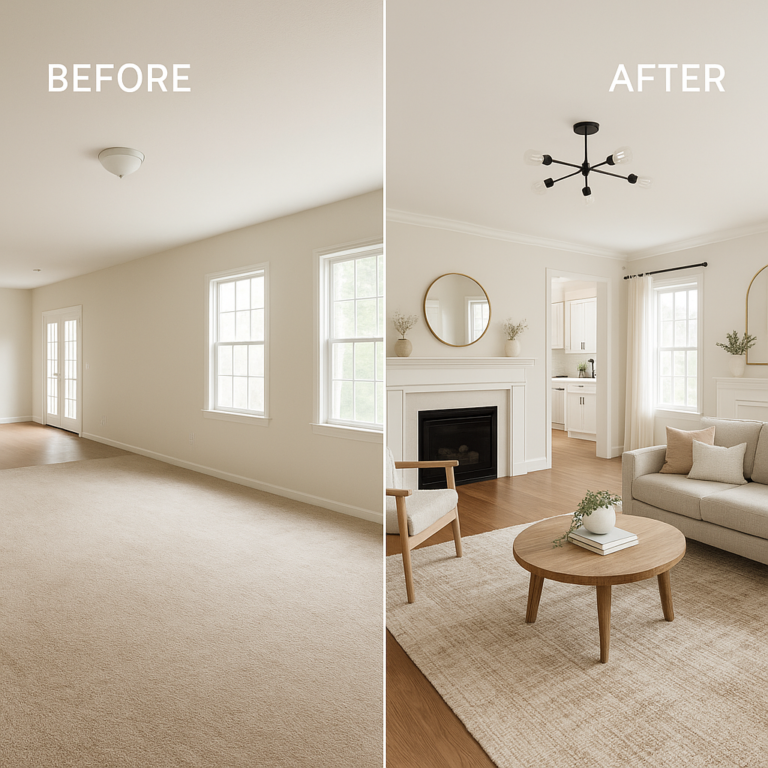
📊 Before and After: Real-Life Transformation Stories
Nothing is more inspiring than seeing a space transformed. Here are a few stories from our team:
The “Dark and Cramped” Living Room
- Before: Dark walls, heavy furniture, no natural light.
- After: Painted walls a soft white, swapped heavy drapes for shers, added a large light-colored rug, and rearranged furniture to create a conversation area.
- Result: The room feels twice as big and infinitely brighter.
The “Cluttered” Home Office
- Before: Desk covered in papers, cables everywhere, no storage.
- After: Added floating shelves, a cable management box, and a stylish desk organizer. Painted the wall a calming blue.
- Result: A productivity powerhouse that actually looks good.
🔮 Future-Proofing Your Decor: Trends vs. Timeless Classics
How do you decorate for today without regreting it tomorrow?
The Rule of 80/20
- 80% Timeless: Invest in classic, high-quality pieces for big items (sofa, bed, dining table). These should last for decades.
- 20% Trendy: Use trends for accessories (pillows, art, small decor). These are easy and cheap to swap out when the trend fades.
Timeless Elements
- Natural Materials: Wood, stone, linen, and wool never go out of style.
- Neutral Palettes: Whites, grays, and earth tones are always in.
- Quality Craftsmanship: Well-made furniture lasts longer and looks better over time.
Trends to Watch (and Maybe Skip)
- Maximalism: Great for some, but can be overwhelming.
- Smart Home Integration: A must-have for modern living.
- Biophilic Design: Bringing nature inside is a trend that’s here to stay.
🏁 Conclusion

So, where do you start when decorating a house? You start by taking a deep breath and realizing that perfection is the enemy of progress. As we’ve learned, the journey is just as important as the destination.
Key Takeaways:
- Start Small: Pick one room or even one corner.
- Plan First: Measure, sketch, and create a mood board.
- Layer: Follow the order of paint, furniture, textiles, and accessories.
- Be Flexible: Nothing is permanent. Experiment and have fun!
Remember, your home is a reflection of you. It’s okay if it’s a work in progress. In fact, that’s what makes it special. As Small Stuff Counts beautifully put it, “A real home isn’t decorated in a day, it’s created over time.”
Now, go grab that tape measure and start your journey. Your dream home is waiting for you!
🔗 Recommended Links
Ready to shop? Here are some of our favorite products and resources to get you started:
Essential Tools & Resources
- Home Project Planner: Free Printable
- Roomstyler 3D Planner: Try it Free
- Canva: Create Mood Boards
Top Brands & Products
- Rust-Oleum Chalk Paint: Amazon | Official Site
- Philips Hue Smart Bulbs: Amazon | Official Site
- West Elm Sofas: Amazon Search | West Elm Official
- IKEA Storage Solutions: Amazon Search | IKEA Official
Books for Inspiration
- “The Home Edit Life” by Clea Shearer & Joanna Teplin: Amazon
- “Living with Color” by Michael S. Smith: Amazon
❓ FAQ: Your Burning Questions Answered

How do I start interior decorating my house?
Start by decluttering and measuring your space. Define your style, set a budget, and create a mood board. Then, tackle one room at a time, starting with the largest furniture pieces. Remember, live in the space before making permanent decisions.
Read more about “🏠 How to Decorate a House on a Low Budget: 15 Genius Hacks (2026)”
How do you start decorating a house from scratch?
When starting from scratch, focus on the floor plan first. Decide on the layout of your furniture before buying anything. Choose a neutral color palette for walls and floors, then add personality with furniture and accessories. Don’t rush; let the design evolve over time.
What is the first room to decorate when moving into a new house?
While many suggest the living room, we recommend starting with the bedroom or entryway. The bedroom is your sanctuary and needs to be comfortable immediately. The entryway sets the tone for the rest of the house. If you have a small space like a laundry room, that’s also a great place to build momentum.
Read more about “🏠 What Can I Use to Decorate My House? 13 Genius Ideas (2026)”
How do I create a cohesive color scheme for my entire home?
Choose a base color (like white, gray, or beige) that flows through all rooms. Then, select 2-3 accent colors that you’ll use in different combinations in each room. Use a mood board to visualize how the colors work together. Consistency in flooring and trim colors also helps tie the home together.
Read more about “🏠 12 Genius Ways to Upgrade Your Home Decor on a Low Budget (2026)”
What budget-friendly tips can help me start decorating a house?
- 👉 Shop your own home: Rearange existing furniture before buying new.
- DIY: Paint old furniture or make your own art.
- Thrift: Look for unique pieces at thrift stores or estate sales.
- Prioritize: Spend on big-ticket items (sofa, mattress) and save on accessories.
- Wait for sales: Don’t buy everything at once. Wait for seasonal sales.
Read more about “12 Essential Things to Decorate Your House With (2026) 🏠✨”
Should I decorate room by room or by floor when starting a home makeover?
Room by room is generally the best approach. It allows you to focus your budget and energy, giving you a sense of accomplishment. Decorating by floor can lead to spreading your budget too thin and feeling overwhelmed. However, if you have an open concept floor plan, you may need to consider the flow between adjacent rooms.
What if I can’t decide on a style?
That’s okay! Start by collecting inspiration from Pinterest or Instagram. Look for common themes in the images you save. You might find you like a mix of styles (e.g., Modern Farmhouse). Don’t be afraid to experiment. As The Southern Source says, “Nothing is permanent.” You can always change your mind.
How do I handle lead times for furniture?
Plan ahead! Order your “inspiration piece” first, as it may take weeks or months to arrive. While you wait, work on other elements like paint, flooring, and smaller decor. Use the waiting time to gather other items so everything arrives at once.
Read more about “💸 15 Genius Ways to Decorate Your House with Little Money (2026)”
📚 Reference Links
- The Southern Source: Where to Start When Decorating a House
- Greenhouse Studio: How to Design a Room
- Small Stuff Counts: How to Start Decorating a House When You Feel Overwhelmed
- Roomstyler: Free 3D Room Planner
- Canva: Mood Board Templates
- Target: Home Decor Collection
- West Elm: Furniture & Decor
- IKEA: Home Solutions
- Article: Modern Furniture
- Rust-Oleum: Chalk Paint
- Philips Hue: Smart Lighting